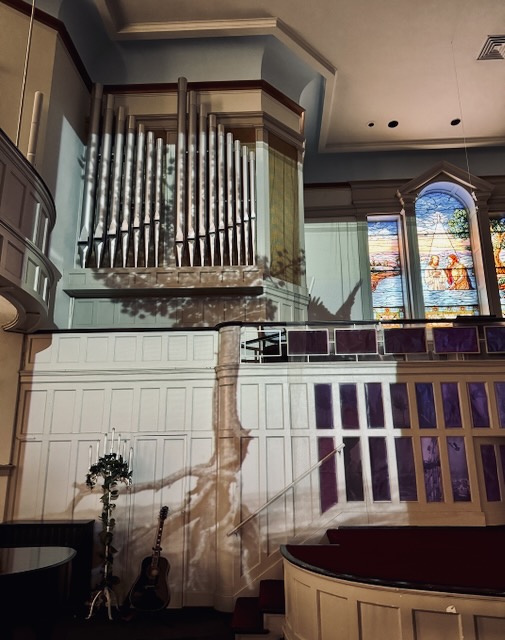
Ash Wednesday invites us to take our first steps into the Lenten journey, turning our hearts toward Easter with honesty and hope. It is a day when the church speaks plainly about who we are: mortal people whose lives are finite, and faithful people who often struggle to live as fully and lovingly as we intend.
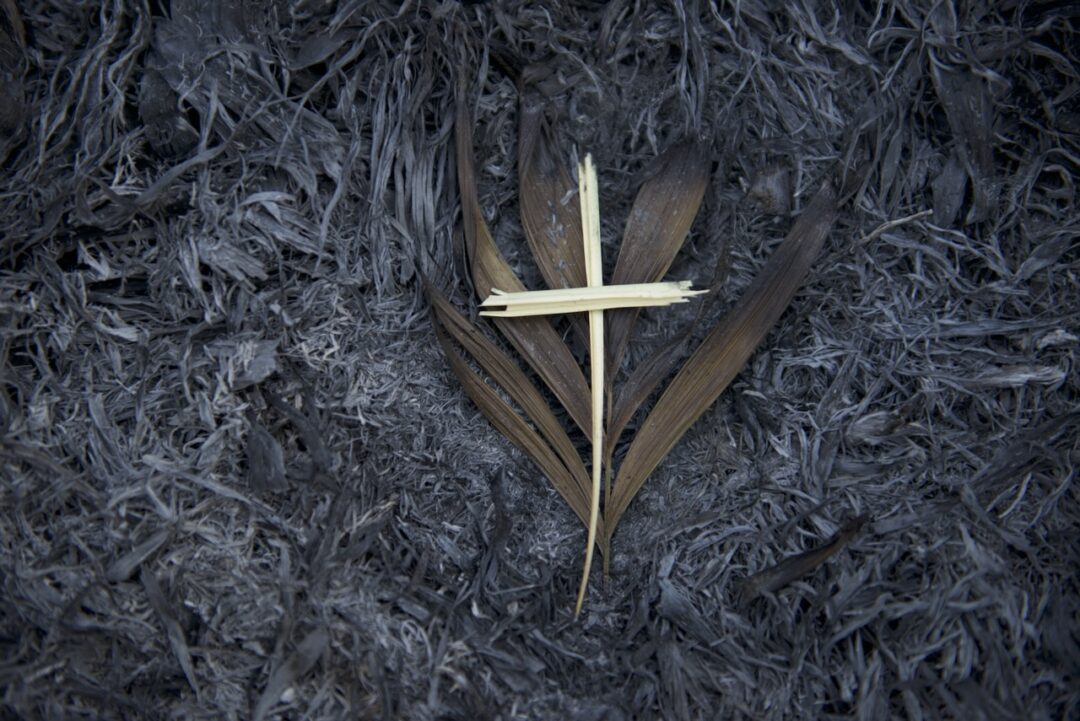
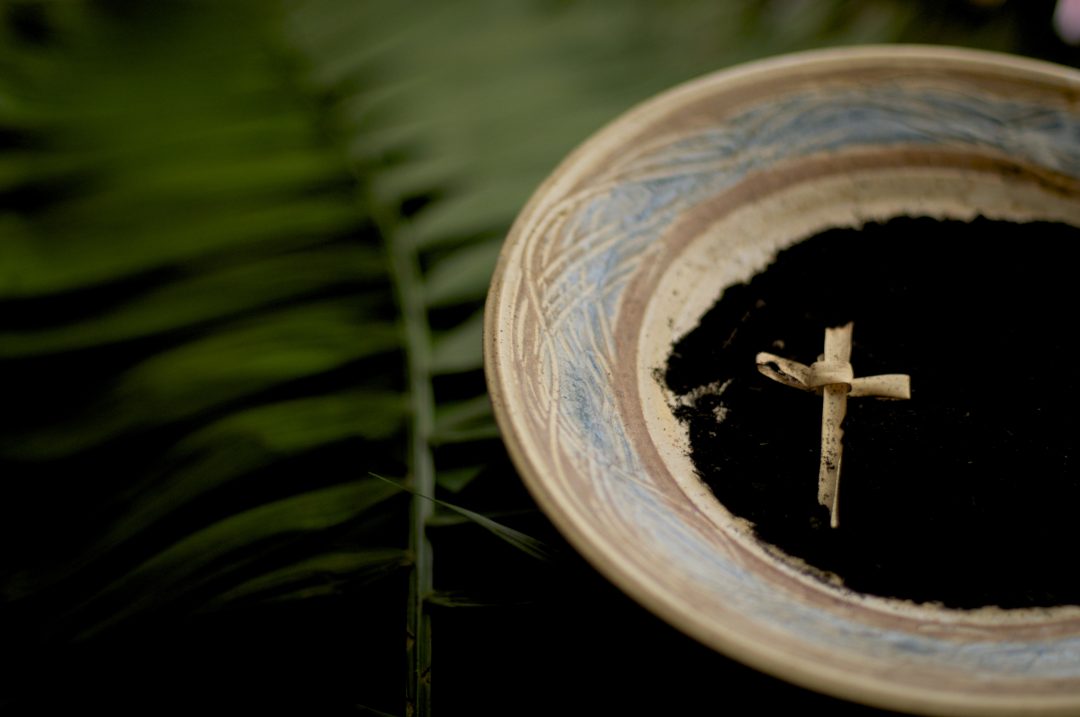
On this day, many Christians receive ashes in the shape of a cross on the forehead and hear the words, “Remember that you are dust, and to dust you shall return.” The ashes come from last year’s Palm Sunday branches, once lifted in joy and now burned and mixed with oil. They hold together two truths we share: our mortality, and our experience of missing the mark in our love for God, one another, and ourselves.
Ash Wednesday gives us a place to begin without pretending. In naming both our limits and our failures, we are invited into a season shaped by repentance, repair, and trust in God’s mercy.
If you are able, we hope you will join us at Tabernacle and invite others to join you. If another Ash Wednesday service in the community fits your day more easily, we encourage you to take part there.
Ash Wednesday at Tabernacle
12:00 PM–5:00 PM | Open Sanctuary
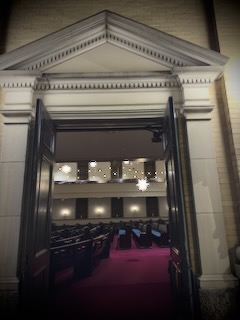
The sanctuary will be open for quiet prayer, guided meditations, and the receiving of ashes. You are welcome to come briefly or to linger in silence and reflection, as your day allows.
6:00–7:00 PM | Ash Wednesday Service
We will gather for a communal Ash Wednesday service in the sanctuary, including music, scripture readings, a reflection, prayer, and the imposition of ashes.
Wherever and however you mark this day, may it be a faithful beginning to the Lenten journey.
Jesus touches the eyes of the blind man. “What do you see?”
Awakening from darkness, the man rubs his eyes. His pupils attempt to make the adjustment. The people move like trees, blurred and unsteady. He’s exhilarated. He’s confused. His healing isn’t complete. And so Jesus touches him again. The pupils continue to adjust, the dimmer grows brighter, the clarity increases. The healing continues. (Mark 8:22-25)
I wonder what happened next?
What does it look like for someone who has been ignored, ostracized, left to the margins, to step back into the world as someone being made whole? His eyes in a constant state of adjustment, clear one moment and blurred again the next. Continual regeneration of sight to inevitable tears from wounds still in need of healing. The emotional pain that surfaced as he processed years of isolation, the ways his own community, maybe even his own family, had left him unseen.
I wonder if he was aware of the healing still unfolding—not in his eyes, but in his heart.
Healing and forgiveness are two sides of the same coin. It takes time to heal from the wounds others have inflicted. Maybe even longer to heal from the wounds we’ve inflicted on ourselves—and on others.
Nadeau experiences blindness in a different way—the kind that slowly takes hold over time. A loss of wonder. A dulling of love. A heart that, little by little, stopped being able to see.
He didn’t notice when his wonder started dimming—when the world lost its enchantment, when everything around him was reduced to function. What began as chasing understanding turned into stumbling, feeling his way through a world that no longer felt alive. He had spent years trying to grasp truth, trying to make sense of his place in the world, but the more he tried to pin everything down, the less he could see.”I had unwittingly built a world in which only what I could explain was real,” he confesses.
I had unwittingly built a world in which only what I could explain was real.
Josh Nadeau, Room for Good Things to Run Wild
And then, one night, Jesus allowed him to see again.
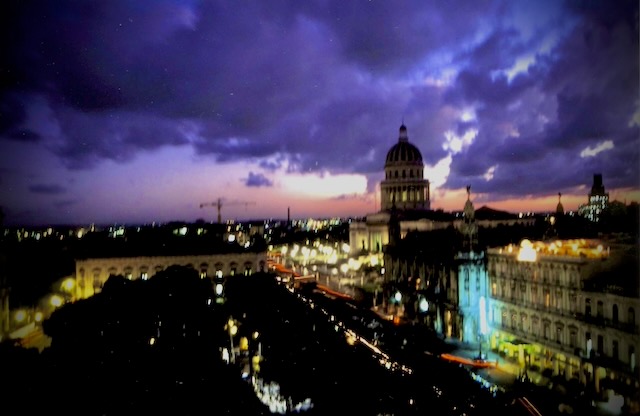
Sitting on a rooftop in the city, looking out over the skyline, the world widened before him. The same steady voice of unconditional love—the music too often drowned out by the noise—whispered in his ear, “See it with my eyes. What do you see?”
He saw the lights stretching into the distance. He saw how small he was, how vast the world was, how he didn’t have to make sense of everything all at once.
Healing takes time. So does seeing.
We have yet to learn we can’t survive without enchantment and that the loss of it is killing us.
He is being invited to feed wonder. Invited to be startled by beauty again. Invited to notice the holiness hidden in ordinary things.
Not all at once. But slowly. A second touch. A second chance.
______________________________
I Wonder…
I wonder where I’ve let cynicism rob me of joy? I wonder if I’ve mistaken understanding for faith? I wonder what I’ve stopped seeing clearly? I wonder what happens when I stop demanding answers and start receiving? I wonder what I need to step back from so I can see with new eyes? I wonder who I would see if I looked in the mirror and saw myself through the eyes of Jesus?
______________________________
This Reflection is Part of a Lenten Journey
This Lent, we’re making space for something deeper—reading Room for Good Things to Run Wild by Josh Nadeau. No book club, no meetings—just a daily invitation to reflect, in whatever way feels right for you.
Josh Nadeau describes the slow unraveling of certainty, the moment when the stories we’ve been told no longer seem to hold. The aching sense that something is missing, that we are meant for more—but what? And how do we get there?
Enter hypocrisy. Pretending. Performing. Playing the part we think will get us to transformation. But, as Nadeau writes, “hypocrisy reaps no rewards.” Because deep down, we know. Something isn’t right. Maybe you’ve felt it—the unease of going through the motions, of doing everything “right” but still feeling hollow. Maybe you’ve feared that if you stop pretending, you’ll be left with nothing at all.
But here’s the thing: That ache, the longing, for more is not failure. It’s invitation. An invitation to step out of the scripts we’ve been given. To stop pretending. To wake up. To move forward, out out Sheol (rock bottom).
Jesus once said, “I have come that they may have life, and have it abundantly.”
John 10:10
Not the life of performance. Not the life of pretending. Real life. Lent is a season for naming the ache—for sitting with it, instead of numbing it. It’s a time to be honest, to stop bluffing our way through, and to trust that there is something on the other side of our honesty. What happens when we stop pretending? Maybe, just maybe, that’s where life begins.
________________________________
This Reflection is Part of a Lenten Journey
This Lent, we’re making space for something deeper—reading Room for Good Things to Run Wild by Josh Nadeau. No book club, no meetings—just a daily invitation to reflect, in whatever way feels right for you. You can keep your reflections private, or if you feel compelled to share, there will be a few simple ways to do so online.
There comes a point when the running stops—not because we’ve figured things out, but because we’re too exhausted, too exasperated, too worried, to keep going. The distractions don’t work anymore. The noise dies down. The silence overwhelms. And there we are.
I can think of multiple times in my life when I’ve found myself in Sheol—that ancient word for the place of the dead, a place of silence, distance, and unknowing. A place that felt like deep absence. And while I may not know exactly what the psalmist envisioned, I know what it is to feel like I am there. Hitting bottom. The pit. The place where you stare at the ceiling at 2 a.m., wondering how you got here.
And if what those further along on this journey—the everyday saints who have walked this road before—say is true, I have every reason to believe I’ll find myself there again. The same is true for you, just as it has been—and will be—for all of us.
And every reason to believe God will meet us there also.
Josh Nadeau found himself there too. He ran, numbed himself with work, poured another drink, kept busy—until he couldn’t anymore. Then came the silence. First unbearable, then something else. Because somewhere in that silence, he began to hear it—the faint, steady presence of something deeper. The Hidden Music, playing underneath it all.
“The Hidden Music resounds, has resounded, as long as time itself, and longer, whether we have ears to hear it or not.”
– Josh Nadeau
At first, all there is is silence. Silent absence. Sheol. Then, if we sit long enough, if we resist the urge to fill the void—for a moment, for a day, maybe even for a whole season—something shifts. A presence once forgotten. A love we thought we had to chase down, only to realize it had already found us.
And that is where grace begins. Again. And again. And again.
And so, we enter this season—a season of resisting the urge to fill the void. A season of sitting in the silence long enough to hear what has been there all along.
This Lent, we’re making space for something deeper—reading Room for Good Things to Run Wild by Josh Nadeau. No book club, no meetings—just a daily invitation to reflect, in whatever way feels right for you. You can keep your reflections private, or if you feel compelled to share, there will be a few simple ways to do so online.
Learn more, access the reading calendar, and join the journey here:
Ash Wednesday marks the beginning of Lent, a 40-day season of reflection, repentance, and preparation for Easter. The ashes placed on our foreheads remind us of our mortality: “Remember you are dust, and to dust you will return.” This sacred time invites us to seek a deeper relationship with God.
Rather than hosting a full service this year, we will join other communities of faith throughout the city. Various leaders from Tabernacle will coordinate participation in morning, afternoon, and evening services at three unique churches, offering a meaningful opportunity to worship alongside our broader faith community. We encourage everyone to receive ashes at any of these services as part of this shared observance.
For those seeking a more personal experience, ashes will also be available on the Tabernacle portico (weather permitting) or in the Sanctuary from 9 a.m. to 9 p.m. The Sanctuary will remain open during this time for quiet reflection and prayer at personal stations. All are warmly invited to come, receive ashes, and stay as long as they feel led to do so.
We will announce the three worship locations and their start times at the end of the week and again on Sunday morning. As we enter this sacred season, may we open our hearts to repentance, renewal, and a deeper connection with God and one another. Let us walk this Lenten journey with intention, embracing both personal reflection and the strength found in community.
As a pastor, I’m constantly aware of the weight people are carrying—both in what they share with me, in what I see, and in what I’m experiencing in the world. I feel it too. It’s rough out there. The pressure, the exhaustion, the constant noise of life—it’s a lot. And I know many of you are seeing it, feeling it, and carrying it in your own way. We’re all longing for peace.
Next week, Lent begins—a season that invites us to slow down, reflect, and make space for what matters. Not by trying harder, but by making room for something deeper.
So here’s what I’m wondering:
What if holiness isn’t about striving but about paying attention?
What if faith isn’t something to master but something to wake up to, right in the middle of our ordinary lives?
What if Lent isn’t about what we give up, but about what we make space to receive?
We’ll begin next Wednesday, March 5—one brief reading a day, skipping Sundays, through Saturday, April 19. I’ll post a daily thread where you can share a thought if you want, or you can just sit with the words on your own. Or maybe you read along and never tell a soul—including me. That’s fine, too.
If this sounds like something you’d like to do, grab a copy in print, on Kindle, or on Audible so you’re ready to start next Wednesday.
Let’s see what happens when we make a little room for peace.
“Have no anxiety about anything,” Paul writes to the Philippians. In one sense it is like telling a woman with a bad head cold not to sniffle and sneeze so much or a lame man to stop dragging his feet. Or maybe it is more like telling a wino to lay off the booze or a compulsive gambler to stay away from the track.
Is anxiety a disease or an addiction? Perhaps it is something of both. Partly, perhaps, because you can’t help it, and partly because for some dark reason you choose not to help it, you torment yourself with detailed visions of the worst that can possibly happen. The nagging headache turns out to be a malignant brain tumor. When your teenage son fails to get off the plane you’ve gone to meet, you see his picture being tacked up in the post office among the missing and his disappearance never accounted for. As the latest mid-East crisis boils, you wait for the TV game show to be interrupted by a special bulletin to the effect that major cities all over the country are being evacuated in anticipation of nuclear attack. If Woody Allen were to play your part on the screen, you would roll in the aisles with the rest of them, but you’re not so much as cracking a smile at the screen inside your own head.
Does the terrible fear of disaster conceal an even more terrible hankering for it? Do the accelerated pulse and the knot in the stomach mean that, beneath whatever their immediate cause, you are acting out some ancient and unresolved drama of childhood? Since the worst things that happen are apt to be the things you don’t see coming, do you think there is a kind of magic whereby, if you only can see them coming, you will be able somehow to prevent them from happening? Who knows the answer? In addition to Novocain and indoor plumbing, one of the few advantages of living in the twentieth century is the existence of psychotherapists, and if you can locate a good one, maybe one day you will manage to dig up an answer that helps.
But answer or no answer, the worst things will happen at last even so. “All life is suffering” says the first and truest of the Buddha’s Four Noble Truths, by which he means that sorrow, loss, death await us all and everybody we love. Yet “the Lord is at hand. Have no anxiety about anything,” Paul writes, who was evidently in prison at the time and with good reason to be anxious about everything, “but in everything by prayer and supplication with thanksgiving let your requests be made known to God.”
He does not deny that the worst things will happen finally to all of us, as indeed he must have had a strong suspicion they were soon to happen to him. He does not try to minimize them. He does not try to explain them away as God’s will or God’s judgment or God’s method of testing our spiritual fiber. He simply tells the Philippians that in spite of them even in the thick of them they are to keep in constant touch with the One who unimaginably transcends the worst things as he also unimaginably transcends the best.
“In everything,” Paul says, they are to keep on praying. Come Hell or high water, they are to keep on asking, keep on thanking, above all keep on making themselves known. He does not promise them that as a result they will be delivered from the worst things any more than Jesus himself was delivered from them. What he promises them instead is that “the peace of God, which passes all understanding, will keep your hearts and your minds in Christ Jesus.”
The worst things will surely happen no matter what that is to be understood but beyond all our power to understand, he writes, we will have peace both in heart and in mind. We are as sure to be in trouble as the sparks fly upward, but we will also be “in Christ,” as he puts it. Ultimately not even sorrow, loss, death can get at us there.
That is the sense in which he dares say without risk of occasioning ironic laughter, “Have no anxiety about anything.” Or, as he puts it a few lines earlier, “Rejoice in the Lord always. Again I will say, Rejoice!”